
What is mica?
Mica is a fascinating mineral. It has 28 known types and has a sheet structure, making it possible to peel into very thin sheets. Mica can be found on any continent in the world and is usually found near granite. Mica is most commonly found in a metamorphic state, but on occasion, it can be found in igneous or sedimentary states.
Mica comes in many different shapes and sizes. As I mentioned earlier, it has 28 types, but here are some that are pretty cool!
Biotite is a black mica that is never sedimentary. Biotite is also known as “the other fools’ gold” because when the sun sparkles off it, it reflects a gold bronze color, making inexperienced gold panners shout, “Gold!” It is used in paint, release for rubber molds and asphalt shingles.
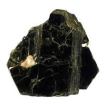
Phlogopite comes in yellowish, greenish or reddish tints. It is one of the rarest kind of mica and is found mostly in Russia.
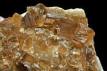
Lepidolite is purple or pink. Many people believe it has healing properties. It is also the birthstone for Libras! It is mined as a source element for lithium.

Glauconite is a green sedimentary mineral mica that is found under the sea. It looks very different since it is not in layers.

Muscovite is the most common form of mica. It was first found in Russia, and the people of the region of Muscovy used it as glass, giving it the name Muscovite. It is found in huge quantities that can weigh up to 100 pounds all over the world.
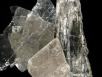
Muscovite is a mostly colorless mineral, but every now and then, it will have a slight green, brown, or green shade. It almost always has a colorless streak. Its chemical formula is KAI2(AISi3O10)(OH2) and its melting point is 1250-1300˚F. It has a pearly luster and its hardness is 2-2.5 with a specific gravity of 2.76N. And a little fun fact: water will make muscovite break apart, making it difficult to clean. The best way to clean it is with an electric toothbrush!
Mica is a very useful mineral It is a great insulator and a bad conductor of heat, making it great for circuit boards. Since it can be peeled into thin, translucent sheets, it was used for windows in the 1700s. Ground mica powder costs about $150 per kilogram because it is common and used so often, but that’s nothing compared to the price of sheet mica, which is elastic, flexible, reflective and resilient. It costs $2000 per kilogram, making it almost $1000 per pound! It is also used as a natural glitter for craft projects, and it is used in toothpaste and cosmetics since it is so shiny. People can use it to improve the soil in their gardens as well.
All in all, I think that mica is a super cool mineral. Thanks!
Works Cited
Dietrich, R.V. “Mica.” Encyclopaedia Brittanica, Encyclopædia Britannica, Inc., Oct. 25, 2013, https://www.britannica.com/science/mica.
The Editors of The Encyclopædia Britannica. “Glauconite.” Encyclopaedia Britannica, Encyclopædia Britannica, Inc., Dec. 8, 2006, https://www.britannica.com/science/glauconite.
King, Hobart. “Biotite.” Geology.com, Geology.com, http://geology.com/minerals/biotite.shtml.
King, Hobart. “Muscovite.” Geology.com, Geology.com, http://geology.com/minerals/muscovite.shtml.
“The Mineral Lepidolite.” Minerals.net, Minerals.net, http://www.minerals.net/mineral/lepidolite.aspx.
“The Mineral Phlogopite.” Minerals.net, Minerals.net, http://www.minerals.net/mineral/phlogopite.aspx.
 The Chronicles of Rafferty